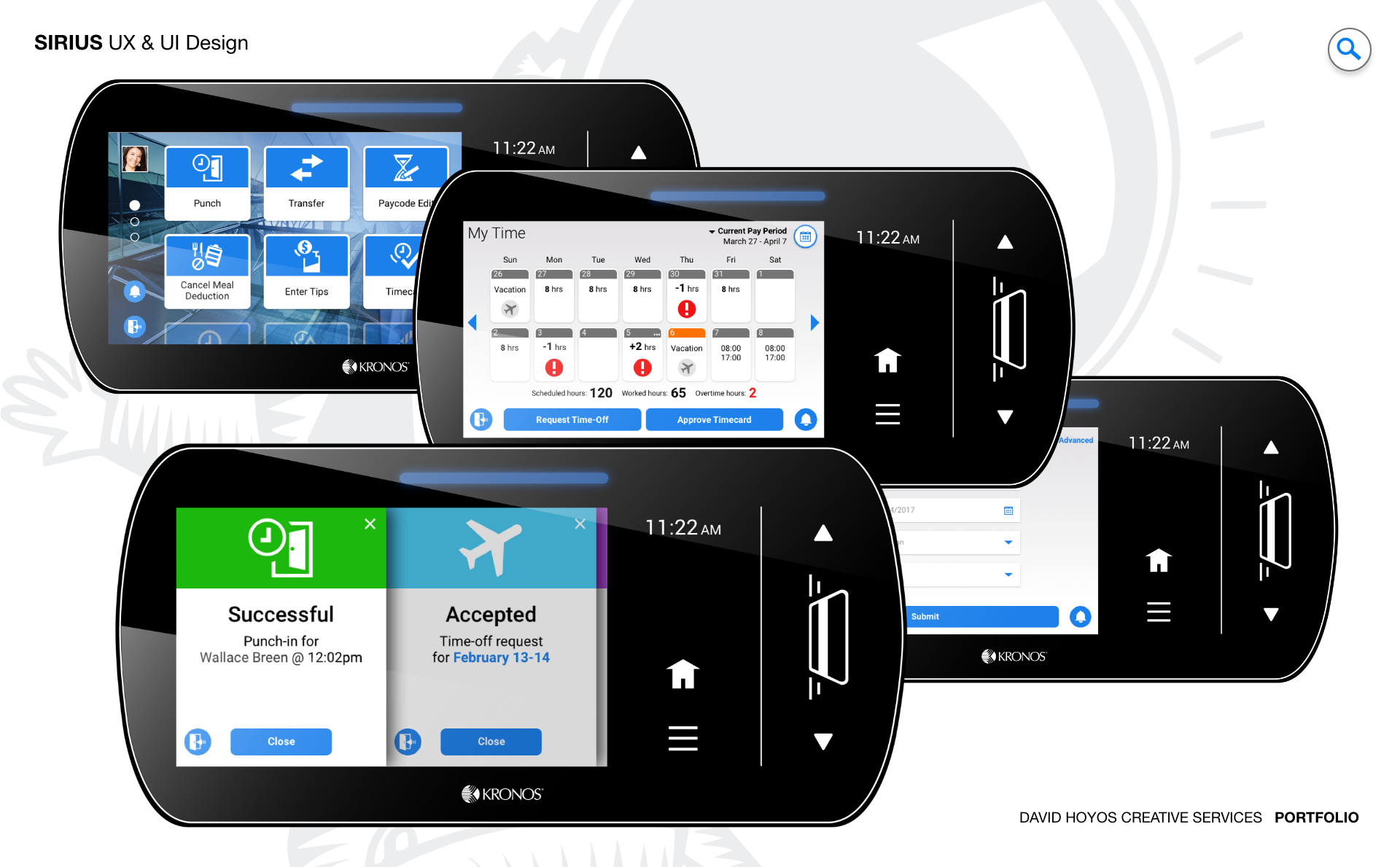
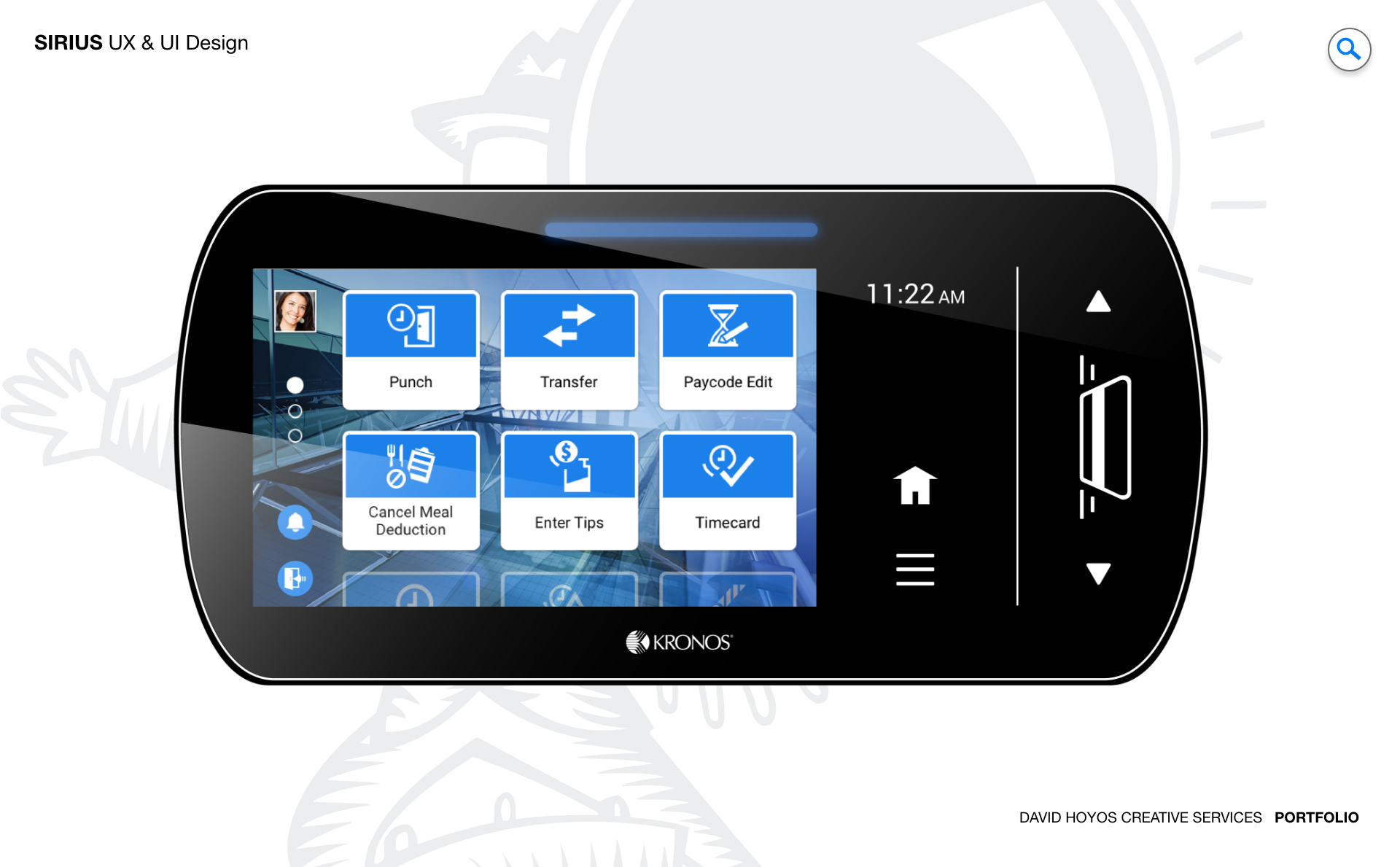
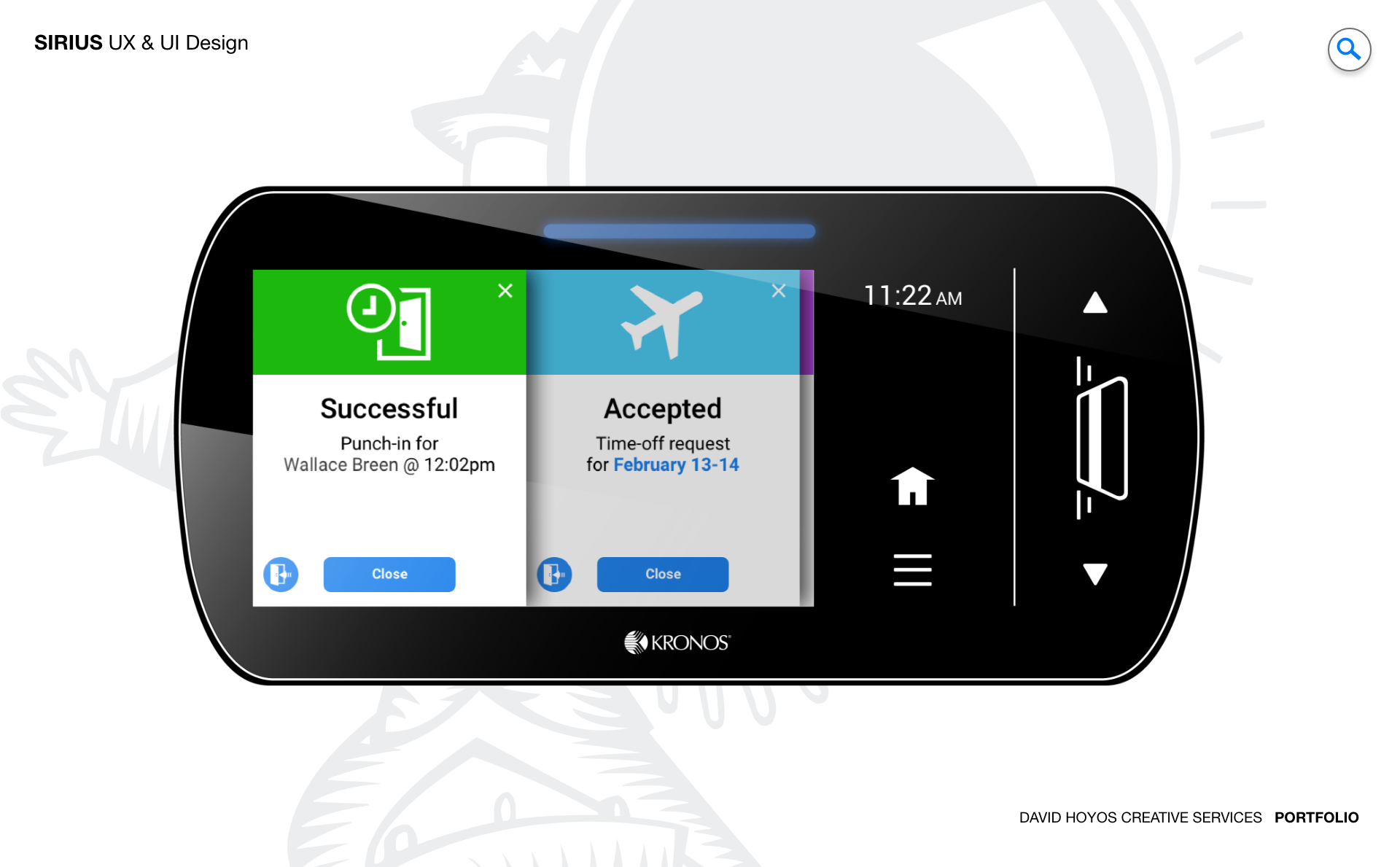
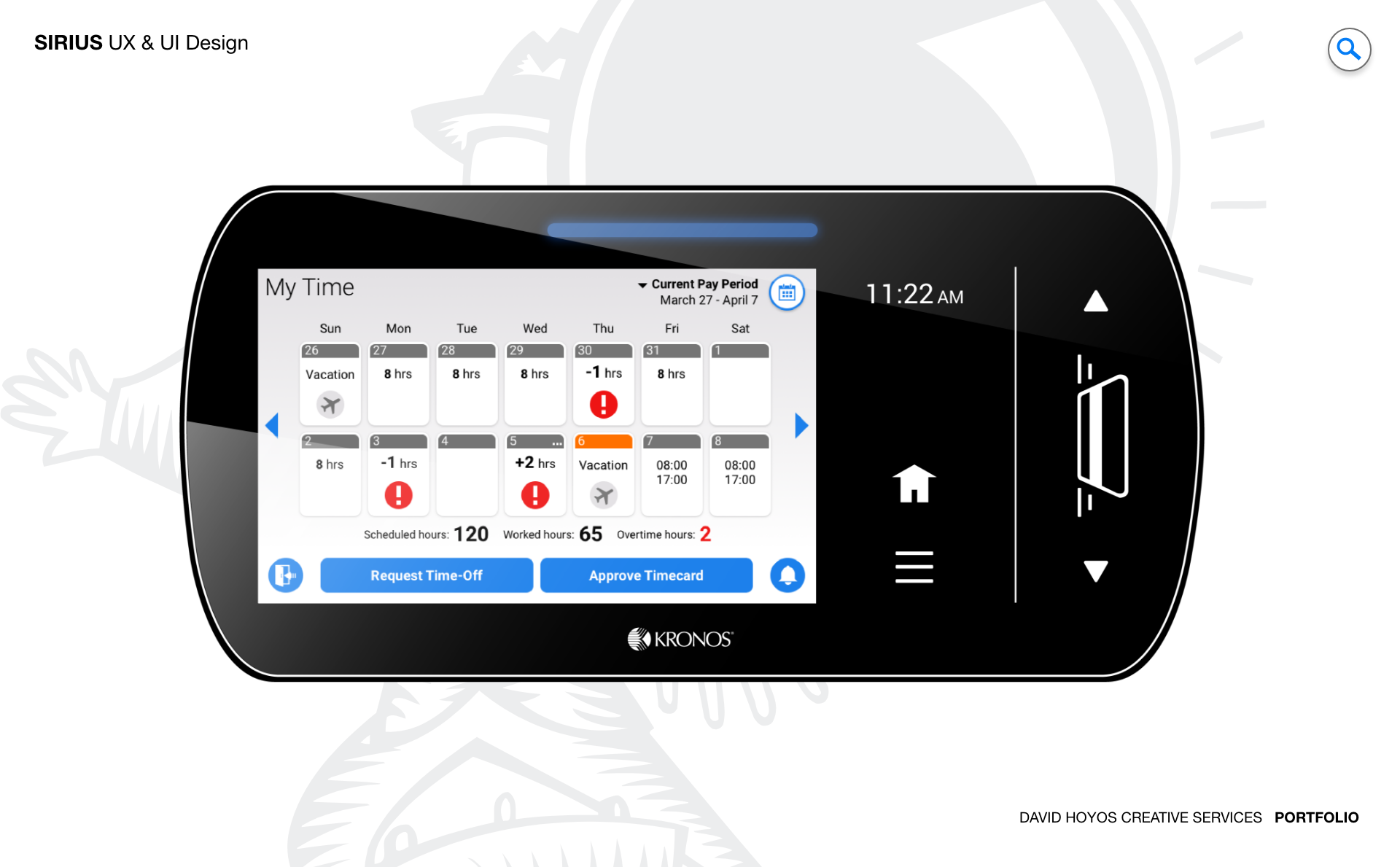
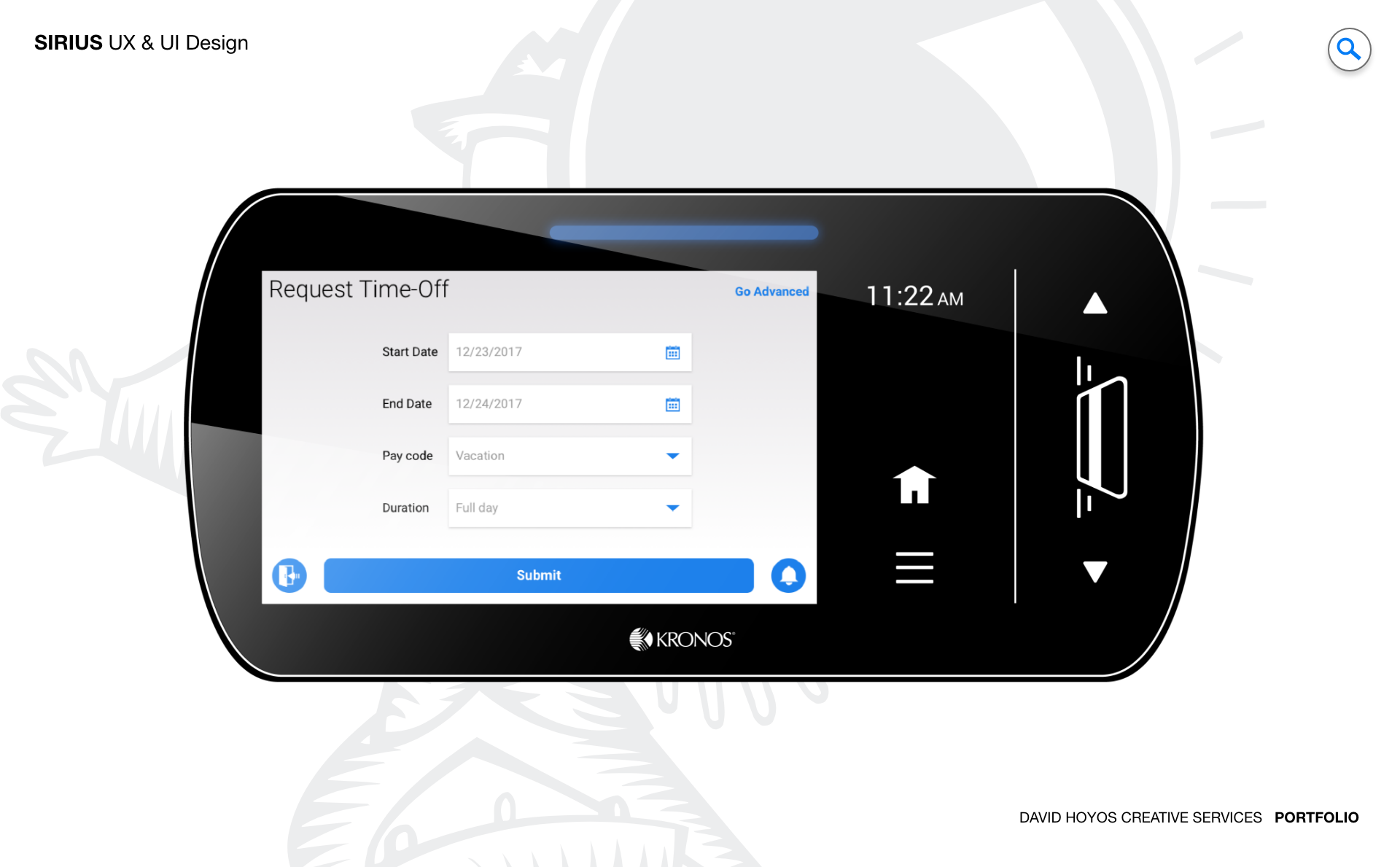
PROJECT New Hardware and Software (UX/UI) for Next Generation of Data Collection Device (hardware and software). Sirius is a next-generation data collection device that represents a rare design challenge: a project where the hardware and the software are being designed together from the ground up, with neither one allowed to constrain the other prematurely. Most enterprise device design works within fixed hardware specifications, adapting the software experience to a form factor that has already been decided. Sirius inverted that dynamic, treating the hardware design and the UX design as a single integrated problem that had to be solved simultaneously. The result was a device where the physical form and the digital interface reinforce each other rather than competing. The project covered the full scope of what makes a device: the ergonomics and aesthetics of the physical object, the performance architecture that powers it, the touchscreen interface that users interact with, and the voice command system that extended interaction beyond touch. That breadth made Sirius one of the most technically and creatively ambitious projects in the portfolio, requiring design leadership that could hold a coherent vision across hardware, software, and the novel territory of voice as a primary interaction modality. OBJECTIVE The objective was to introduce a data collection device that fundamentally changed how transactions and data entry were conducted in the field. Where existing devices in this category typically prioritized durability at the expense of usability, or cost at the expense of capability, Sirius was designed to deliver all four: a durable, ergonomic hardware form combined with a software experience sophisticated enough to serve managers and hourly employees alike across multiple industries and transaction types. The hardware design established the foundation: a sleek, ergonomic form factor with a high-resolution touchscreen, a powerful processor, a comprehensive sensor suite including proximity detection, accelerometer, and gyroscope, and full connectivity across USB, Bluetooth, and Wi-Fi. The software interface built on that foundation with a visual design that was fluid, responsive, and accessible to users of all technical backgrounds. Voice command capabilities, powered by natural language processing and voice recognition, added a third interaction layer that made the device faster and more convenient in the hands-occupied, attention-divided conditions where data collection devices are used. CHALLENGE Form factor, vertical space, data density. Form factor was the most complex challenge because Sirius was being designed from scratch, which meant the physical dimensions and ergonomics of the device were as much a design variable as the layout of the software interface. A device too large to hold comfortably during extended use fails regardless of how good the software is. A device too small to accommodate the touchscreen area and connectivity ports the software requires constrains the UX from the outside. Resolving the hardware form factor required iterating on physical proportions alongside digital wireframes, with each discipline informing and constraining the other in real time. Vertical space on a device screen is a different problem than on a desktop monitor. A data collection device operates in portrait orientation, often at arm's length, in environments where glanceability matters as much as information depth. The interface had to surface the right information in the available vertical real estate without requiring the user to scroll through interaction flows that needed to be fast and decisive. Every screen state had to be designed with the assumption that the user had limited time and limited attention to give it. Data density created the third constraint. Data collection devices handle transactions that involve multiple data points: product codes, quantities, prices, locations, timestamps, and status fields, all of which the user may need to see, enter, or verify during a single workflow. Presenting that density on a small touchscreen without overwhelming the user required a disciplined hierarchy of what was primary, what was secondary, and what could be accessed on demand rather than displayed by default. PERSONA(S) Manager, hourly employee. Two personas with distinct operational contexts and distinct primary use cases for the device. Managers use data collection devices to oversee operations, audit inventory, approve transactions, and access summary data that informs decisions about their department or location. For managers, the device had to surface the right contextual information without requiring them to navigate through flows designed for data entry. The software interface had to recognize and serve a mode of use that was more supervisory than transactional, giving managers quick access to the reports and status views that made the device useful for their role. Hourly employees are the primary transaction users of the device. They conduct data entry, process transactions, and use the device repeatedly throughout a shift in physical environments that are often demanding: retail floors, warehouse aisles, clinical spaces, and production lines. For these users, the device had to be fast, reliable, and forgiving of the conditions under which it was being used. Voice command capabilities were particularly valuable for hourly employees in hands-occupied situations where touching the screen was impractical, giving them a reliable alternative input method that maintained productivity without breaking their physical workflow. INDUSTRY Retail, manufacturing, healthcare and hospitality. Four industries where data collection is a core operational function and where the device would be used under conditions that varied significantly in physical environment, task type, and user context. In retail, Sirius supported inventory management, price verification, and transaction processing on the sales floor and in the stockroom. The device had to be fast enough to keep up with the pace of retail operations and legible enough for the variable lighting conditions of a retail environment. In manufacturing, the device was used for production tracking, quality control data entry, and inventory management in settings where both the hardware durability requirements and the usability requirements operated at their highest levels. In healthcare, data collection devices touch patient records, medication management, and clinical workflows, where accuracy is not a design preference but a safety requirement. Every interaction the device supported in this context carried implications that demanded the highest standard of UX precision. In hospitality, the device supported the operational data collection needs of a sector defined by speed of service, where a device that slows down a workflow hurts the business it was meant to support. Sirius had to be demonstrably faster than the manual and legacy digital alternatives it was replacing in every industry context it served. PROCESS Assessment + Exploration + Design + Production + Deployment Assessment began by studying how data collection was being done across the target industries: what devices were in use, where those devices were succeeding and failing, and what the people using them needed that existing hardware and software was not providing. That research revealed consistent themes: hardware that was durable but uncomfortable for extended use, software interfaces designed for function without attention to usability, and no integration of voice interaction in a product category where hands-free operation had real value. The assessment created the design brief for a device that addressed all three dimensions at once. Exploration tested hardware form factors and software interface architectures in parallel, with the constraint that decisions in one domain had to be validated against their implications in the other. A screen size that worked well for the software interface had to be tested against the ergonomic constraints of the hardware form. An interaction pattern ideal for touch had to be evaluated for how it would or would not translate to voice command. The presence of both a front-end developer and a software architect during this phase meant that technical feasibility for hardware integration and software rendering was a real-time conversation rather than a late discovery. Production and deployment completed the cycle, taking the validated design through to a fully built and released product. DELIVERABLES Wires, High-Fidelities, BuildKit (specs). Wireframes for a hardware and software project like this had to specify two overlapping sets of decisions: the physical design of the device and the digital design of the interface running on it. The wire phase resolved the structural logic of the software experience across the transaction and management workflows the device supported, while also establishing the spatial and proportional constraints that the hardware design had to satisfy to make the software work as intended. Those dual specifications gave the production phase a foundation that was coherent across both the physical and digital dimensions of the product. High-fidelity designs translated the structural decisions into the complete visual and interaction language of the Sirius device, including the touchscreen UI, the visual treatment of voice command states, and the hardware design language that gave the physical device its identity. The BuildKit delivered the full implementation specification for engineering: component states, animation behaviors, voice interaction flows, hardware integration specs, and asset exports organized to give both the software and hardware development teams everything needed to build the device as designed. TEAM UX + UI + Research + Front-end Developer + Software Architect + PM UX, UI, Research, a Front-end Developer, a Software Architect, and Product Management. A hardware and software project of this scope required engineering representation at every phase of the design process, not just during hand-off. The front-end developer's involvement shaped how the software interface was architected for performance on the device's hardware, and the software architect's presence ensured that the voice command integration and the sensor-driven interaction features were technically viable before they became core commitments in the design. Decisions that would have been expensive to revisit after engineering locked in were made collaboratively during exploration. Research grounded the concept in real user behavior across the four target industries, validating the hardware ergonomics against actual usage conditions and the software interface against the transactional workflows the device was designed to support. Product Management kept the design aligned with the commercial and operational requirements Sirius needed to meet to be viable as a product, ensuring that the creative ambition of the concept was balanced against the constraints of what could realistically be delivered at the quality level the project demanded. ROLE Creative and design direction (UX/UI). Creative and design direction across UX and UI. The creative direction challenge on a hardware and software project is different from either discipline alone: the vision has to be coherent across the physical object and the digital interface, which means the creative direction has to hold both in frame simultaneously. The design vision for Sirius was a device that felt premium and purposeful in the hand, with a software interface that matched that quality — not a capable device with a mediocre UI, or a beautiful interface on a forgettable piece of hardware, but a product where both were designed to the same standard and read as a single, intentional thing. At the design direction level, the role involved driving decisions across every phase from assessment through deployment, maintaining the integrity of the design intent as it moved from exploration into production and then into the built product. A project of this scope and ambition requires active direction at every stage, because the gap between a well-designed spec and a well-built product is where quality is most often lost. Staying close to the production and deployment phases was as important as setting the direction during exploration.